I saw a commercial for Marty Huggins….I’m sorry! I meant Mark Jacobs, a 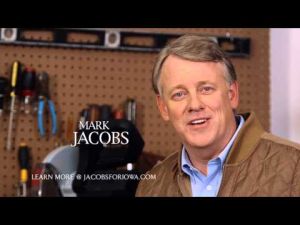 Republican running for the senate seat about to be vacated by Tom Harken. In it he makes his case by saying that he’s been a businessman who has had to “make payroll” and has “balanced budgets.”
That is the criteria that many Americans feel is needed the most in Washington.
Jacobs ends his spot by throwing a calculator into his box of things he’s bringing with him. Cute.
I was reminded (actually, I’ve never forgotten) that this was the same rhetoric used in t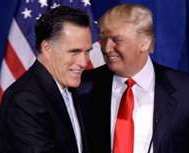 he 2010 elections by the likes of Romney, Trump, and well, just about every single Republican running for anything: “Government is a business and I can run it!”
It makes sense to a lot people that during tough economic times we need ledger balance leaders from the business world.
(Curiously, many of the people who believe that, are up to their ears in debt, but it  has been my experience that very few people actually live the way they say the rest of us should)
This idea could very well decide the Midterm elections and the course of America and it is wrong….dead wrong.
To start this off with a bang, does everyone know the history of businessmen as presidents? There have been two: Herbert Hoover and George W. Bush.
How’d they work out?
An economic disconnect was inevitable because our businessman-presidents failed to recognize a simple reality: The Federal Government is not a business- it is a government.
Two very different definitions, objectives and responsibilities. Nowhere in our Constitution is it outlined or stated that the form of government being created therein is to be run like a business. Nowhere in the Separation of Powers and the Branches of Government does it resemble the paradigm of a business. Nor does the purpose of a business share the responsibilities of representation.
“But Gary, government should be run like a business, that would be a good thing!” is the oppositional statement that I just made up so that I could address this argument.
The demand on a business is that it produces a profit; that is how it sustains, grows and gives the shareholders their dividends. There is no guarantee that it will be a successful business and fulfill that end into perpetuity, and so the responsibility for leadership falls on its CEO and the Board of Directors. They alone make the decisions to realize that goal, but usually leverage their personal risk onto the business itself.
If you were to compare this paradigm to a form of government, it would more closely resemble a Dictatorship; the decisions are made at the top and implemented down the chain of command. Employees (citizens) comply with the rules or lose their jobs.
A representative democracy (a Republic) is the form of government outlined by our Constitution where the fundamental objective is to “represent” its constituency, according to that charter, fairly and evenly. Where the poorest, least powerful voices among us are represented as fully as anyone else.
The authority, therefore, rests in the body of the people, as a whole, and the leadership pyramid is turned upside down.
What has happened, causing a serious government dysfunction, is that the “people” in this great republican experiment have been marginalizing their own voice by allowing special interests, controlled by wealth, to invade policy. Wealth, by its very nature, compromises equality and inevitably leads toward a plutocracy, which is anything but representative democracy. Wealth, in and of itself, is not corrupt (and most of us share a desire to accumulate it), but it is also does not carry a moral directive, and when it overwhelms a system predicated on equality, justice can be corrupted.
The business model for government is the wrong vessel to correct the course of our societal and economic health. In fact, it is what we have been evolving toward for decades following neoliberal economic policy since the 1970’s and is the fundamental transformation that has weakened the consumer class. It came to fruition under President Reagan’s “trickle down” policies and was harvested by the Bush tax cuts in 2001 and 2003.
Consider that those at the top of the economic pyramid have increased their holdings by 250% over the past 30 years. The top 1% controls nearly half of America’s wealth and the top 10% controls 90%. That is the business-model and it led us into a deep recession because the engine of capitalism, the Middle Class, has been squeezed into near non-existence.
If we want to correct our course and establish sustained prosperity by strengthing the consumer that spends the money that, in turn, grows the economy, the last thing we want to do is make America more of a “business” and less of a Republic.
Our trend toward appeasing the rich almost suggests a collective memory of the conservative allegiance to King George, leaving many  people more comfortable with the thought of a Ruling Class. Yet, we are still a free, democratic, republican government and we, collectively, hold the power over ourselves. We cannot effectively exercise that power, however, until we agree on certain principles.
But, there’s good news– those principles are already written down, ratified and sworn to be upheld; they exist in our great charter; the Constitution.
Businesses employ us, create opportunity and fuel spending; there is nothing inherently wrong with the business model, but it isn’t a model for fair and impartial governance. Only if we elect legislators who understand and support the constitutional tenets that protect freedom of religion, speech, inalienable rights, and egalitarian justice with equal representation, can we begin to create better “government.”
A business has little interest in, or need for, such ideas, unless they increase margins and profit for shareholders….like the Motch brothers. 
